Purchase on Amazon: https://www.amazon.com/Discovering-America-Again-Quotations-Explorers/dp/B0GCZ7RCDB/
William P Duncan
What is so rare as a day in June? Asked the poet James Russell Lowell. Now that June is nearly half over, the days have become even more rare! (The cartoonist Walt Kelly answered humorously in Pogo: “The 29th of February is pretty rare, but the 37th of November is rarer still!” June resumes our near chronological travel through the explorers, now in the late 1700s and early 1800s. We will hear from the explorers of the Louisiana Purchase, Meriwether Lewis and the less famous Zebulon Pike, and from a trio of John’s: John Boit, who sailed to the Pacific Northwest in the 1790’s, John Sevier, “Father of Tennessee” (and also “Father of Frankline”!), and John Shenandoah, a Native American There are many more throughout the month – Lewis’s partner William Clark, General Rufus Putnam, John James Audubon, and the enigmatic Sequoyah.
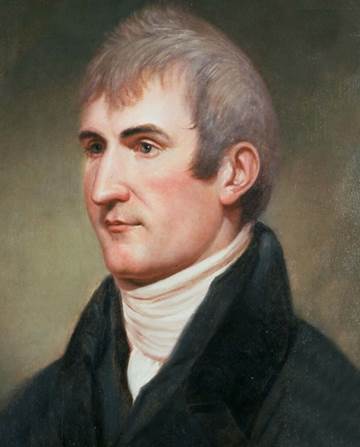
Meriwether Lewis
Meriwether Lewis was charged by President Jefferson to explore the northwest areas of the Louisiana Purchase. William Clark had been in the Army with Lewis, and joined as co-leader. Their expedition to the northwest took several years and has long been celebrated. Lewis himself met a mysterious and untimely end on a return trip to Washington DC a few years later.
Meriwether Lewis
“To accomplish monumental feats, one must have faith in the impossible and forge ahead against all odds. “
If you want to achieve great things, these are the words for you. Start with faith and forge ahead. With nearly an entire continent in front of them, the explorers of these United States needed this attitude. With a country to preserve for the next generation, we need them too.
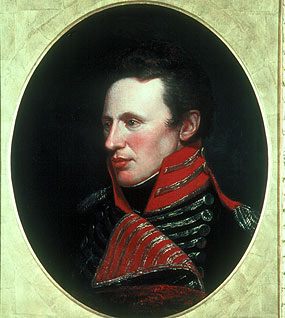
Zebulon Pike
Today he is most remembered for the mountain he named for himself – Pike’s Peak. But Pike explored more of the Louisiana Purchase than Lewis and Clark – he first went to the Mississippi headwaters, where he met the Native American tribes who had been trading with the French. Then he was sent to the southwest corner of the Purchase, to establish the border with Spanish territory: here he visited Kansas, Colorado, and New Mexico. He died a military hero in the War of 1812.
Zebulon Pike
“Soon after the purchase of Louisiana by an enlightened administration, measures were taken to explore the then unknown wilds of our western country—measures founded on principles of scientific pursuits, combined with a view of entering into a chain of philanthropic arrangements for ameliorating the condition of the Indians who inhabit those vast plains and deserts. His Excellency, Meriwether Lewis, then a captain of the first regiment of infantry, was selected by the President of the United States, in conjunction with Captain C. Clarke [Wm. Clark], to explore the then unknown sources of the Missouri, and I was chosen to trace the Mississippi to its source, with the objects in view contemplated by my instructions.“
Pike’s first expedition to the upper Mississippi was concurrent with the expedition of Lewis and Clark. This quote, from his report, sets out the official reason for these expeditions. The upper Mississippi was not as unknown as the upper Missouri, but as new territory for the United States, both required exploration. The addition of the Louisiana Territory brought in many different areas to the growing United States – how different we would be without the Mississippi and Missouri watersheds!
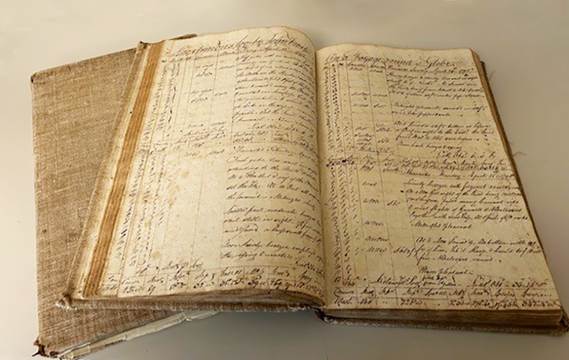
John Boit’s Logbooks
John Boit was first officer on the Columbia, which explored the Pacific Northwest under captain John Gray. Gray’s journal of the voyage was mostly lost – after his death, his sister used the pages to light her kitchen fires! But the journal of Boit survives to document this voyage!
John Boit
“The River extended to the NE. as far as eye cou’d reach, and water fit to drink as far down as the Bars, at the entrance. We directed our course up this noble River in search of a Village. The beach was lin’d with Natives, who ran along shore following the Ship.“
The Columbia River – the great river of the Northwest! Gray had seen the mouth of the river on his first voyage but was unable to enter due to the tides, currents, and a dangerous sandbar at the river mouth – sailing ships are at a disadvantage compared to those under power. On this voyage they were able to enter, and view the beauty of the river. The Columbia is over 1200 miles long and is the fourth largest river in the USA by flow, another natural wonder of our country.
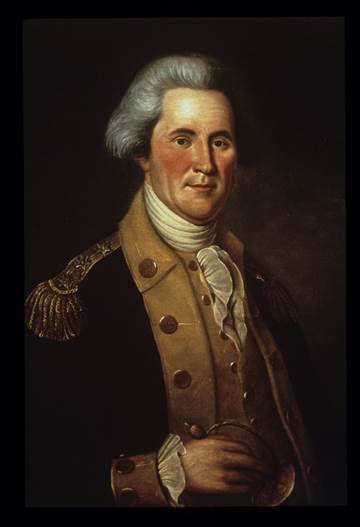
John Sevier
Sevier moved his family to Tennessee before the Revolutionary War, when it was beyond the frontier. The early history of Tennessee is “all Sevier, all the time”!
John Sevier
“We shall continue to act as independent, and would rather suffer death in all its various and frightful shapes than to conform to anything that is disgraceful.“
John Sevier is known as the “Father of Tennessee”. Born in Virginia, he brought his family to the Tennessee frontier in the 1770’s. In the Revolutionary War, Sevier served in the Tennessee militia and fought in the battle of King’s Mountain. Sevier was the governor of the attempted State of Franklin, then served as the governor of Tennessee for 11 years. He was a political rival of Andrew Jackson, and nearly fought a duel with him.
Here Sevier states those values that were common to the founders of the United States and their generation. Liberty and honor were paramount to them, and they were vigorous in defending them. These are values that we should also preserve and cherish.
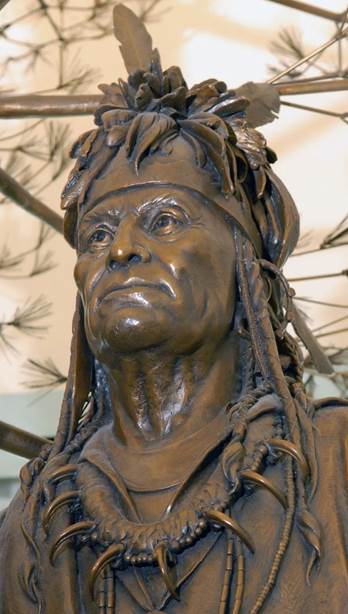
John Shenandoah
Shenandoah was born into the Susquehannock tribe, but was adopted by the Oneida and became a trusted leader. He lived through much of the early history of the colonies and the new United States, born in 1706 and dying in 1815.
John Shenandoah
“I am an aged hemlock. I am dead at the top. The winds of an hundred winters have whistled through my branches. Why my Jesus keeps me here so long, I cannot conceive. Pray ye to him, that I may have patience to endure until my time may come.“
Shenandoah lived to a very advanced age – near 110! In his later years, he recognized that he had lived far longer than any of his peers. In the 1760’s, Shenandoah and many of the Oneida converted to Christianity. This was when he took the name “John” as a Christian name. He was buried next to the missionary Samuel Kirkland, who had brought Christianity to the Oneida and later founded Hamilton College. Our quote today reflects the strong faith that Shenandoah had in Christ.
June leads us into the big month of July with Independence Day itself, which is 250 years! But we will continue through the end of the year!
Purchase on Amazon: https://www.amazon.com/Discovering-America-Again-Quotations-Explorers/dp/B0GCZ7RCDB/

 Discovering America Again
Leave a comment